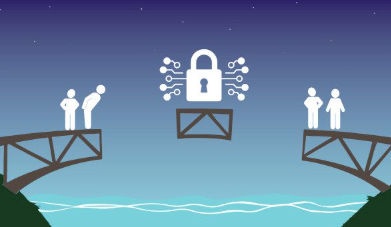

Blockchain verification is the process of confirming that transactions are valid, properly formed, and anchored to an immutable history. It examines data integrity, consensus, and timing to limit tampering and ensure reliability. Hashing provides tamper-evidence, while block formation and network latency shape confirmation speed. Miners and validators translate protocol rules into observable actions, revealing how incentives and governance sustain trust. The mechanisms are measurable, but gaps and shifts in incentives invite continued scrutiny.
What Is Blockchain Verification and Why It Matters
Blockchain verification refers to the process of confirming that transactions and data within a blockchain are valid, correctly formed, and anchored to an immutable history.
The topic analyzes how verification processes establish data integrity, prevent tampering, and sustain systemic resilience.
It also examines trust dynamics among participants, governance, and incentives that influence voluntary adherence to verification standards and accountable outcomes.
How Blocks Get Verified: From Transactions to Consensus
Block verification begins with the careful reception and validation of incoming transactions, ensuring they are properly formatted, signed, and non-double-spent before they enter a candidate block.
The process analyzes block validation steps, transaction ordering, and network latency to assess timeliness.
Consensus mechanisms, protocol governance, and block reward economics shape validation criteria, guiding robust security without sacrificing freedom and efficiency.
Cryptographic Hashes, Chains, and Tamper-Evidence Explained
Cryptographic hashes provide a deterministic, fixed-length fingerprint for any input data, enabling compact, tamper-evident representations that change markedly with even a single bit alteration.
The discussion analyzes hash integrity within blockchain structures, examining chain validation, cryptographic proofs, and tamper evidence.
It also considers consensus dynamics impacting block propagation, showing how robust hashing underpins reliable, transparent verification without introducing extraneous complexity.
Real-World Verification: Miners, Validators, and Trust in Networks
In real-world networks, verification hinges on the actions of miners and validators, whose roles translate abstract protocols into observable, practice-driven processes. Empirical scrutiny reveals how trust networks and incentives shape behavior, aligning individual gain with collective integrity.
This dynamic reduces variance in outcomes, tests resilience under attack, and clarifies where centralized bias may arise, guiding system design toward robust, transparent verification.
See also: howblogs
Frequently Asked Questions
How Does Blockchain Verification Scale With Increasing Network Size?
Blockchain verification scales sublinearly under optimistic assumptions, with growth limited by consensus latency and data throughput. Scalability benchmarks reveal diminishing returns as nodes increase; latency tradeoffs arise from propagation delays, while empirical evidence favors parallel validation and sharding.
What Legal Frameworks Govern Blockchain Verification in Different Countries?
Legal regimes for blockchain verification vary by jurisdiction, with compliance frameworks and governance structures shaping obligations; regulatory variance creates cross border enforcement challenges, demanding empirical assessment of how states harmonize standards to sustain innovative freedom while ensuring accountability.
Can Verification Speed Ever Compromise Security or Decentralization?
Verification latency can threaten security and decentralization if latency incentivizes shorter-term, centralized solutions; however, robust consensus and distributed incentives mitigate this. Empirical analyses show limited but measurable risks from mining centralization and network delays.
How Are Data Privacy and Compliance Balanced in Verification Processes?
Balancing data privacy and verification relies on robust privacy controls and adherence to compliance frameworks; empirical analyses show that selective disclosure, zero-knowledge proofs, and auditable controls preserve accountability while safeguarding participant confidentiality and meeting regulatory expectations.
What Future Innovations Could Disrupt Current Verification Mechanisms?
Disruption could arise from Decentralized oracles and Quantum ready cryptography, juxtaposing openness with vulnerability as trust shifts outward. Empirically, hybrids may outperform today’s models, balancing transparency against privacy while preserving verifiable integrity in rapidly evolving ecosystems.
Conclusion
Blockchain verification rigorously connects transaction validity, cryptographic proofs, and consensus to sustain an immutable ledger. Empirical patterns show that network-wide validation latency typically scales with block propagation time, often stabilizing within a few dozen seconds for major chains. An especially engaging statistic: Bitcoin’s probability of double-spending a confirmed transaction drops to near zero after six confirmations, illustrating how cumulative verification hardens trust through hardened tamper-evidence and incentive-aligned participation.